
Are you considering dental implants but concerned about placement accuracy and surgical risks?
The precision of implant placement directly impacts long-term success, patient comfort, and final restoration aesthetics. For dentists new to guided surgery and patients researching their options, understanding surgical guides transforms anxiety into confidence. This comprehensive beginner's guide explains exactly what surgical guides are, how they work, and why they matter for predictable implant outcomes.
A surgical guide is a custom-made template designed to fit precisely over your teeth, gums, or bone during implant surgery. Think of it as a GPS system for dental implants. It directs the drill to the exact position, angle, and depth predetermined during digital treatment planning, ensuring the implant goes exactly where it needs to be.
For dental professionals, surgical guides for dental implants represent the bridge between virtual planning and clinical execution. For patients, they mean safer, faster procedures with better outcomes. This guide covers everything beginners need to know about surgical guides for dental implants.
Understanding the Basics: What Makes a Surgical Guide Essential
Before diving into technical details, let's establish why surgical guides exist in the first place.
The Challenge of Freehand Implant Placement
Traditional freehand implant surgery relies on the surgeon's visual assessment and clinical judgment. While experienced clinicians achieve excellent results, this approach has inherent limitations. The oral cavity offers restricted visibility and space, making it difficult to achieve perfect angulation every time. Even minor placement deviations can complicate the final restoration or risk damage to adjacent structures like nerves and sinuses.
According to the National Center for Biotechnology Information, proper implant positioning is directly related to long-term success. Even slight variations from the ideal placement can create difficulties in fabricating final prostheses and increase the risk of complications.
How Surgical Guides Address These Limitations
A surgical guide transforms guesswork into precision. By incorporating data from CBCT scans and digital impressions, the guide provides physical direction for every drilling step. Metal sleeves embedded in the guide control the drill path, preventing deviation from the planned trajectory.
This level of control dramatically reduces surgery time. Many procedures using surgical guides can be completed in 10 to 15 minutes per implant, compared to significantly longer times for freehand placement. Patients experience less trauma, reduced post-operative pain, and faster healing.
The Three Core Components of Every Surgical Guide
Every surgical guide, regardless of type or complexity, consists of three essential elements.
First, the custom-fitted base replicates the exact surfaces of your mouth. This acrylic or resin structure sits snugly over teeth, tissue, or bone, creating a stable platform during surgery.
Second, precision drill sleeves are positioned at specific locations. These metal cylinders guide surgical instruments to the correct position, angle, and depth. The sleeves ensure each drill step follows the digital plan exactly.
Third, stabilization features keep the guide from moving during the procedure. Depending on the guide type, these features might include tooth contact points, tissue adaptation, or bone fixation screws.
Types of Surgical Guides: Choosing the Right Support Method
Not all surgical guides are identical. The type depends on your clinical situation, remaining dentition, and treatment goals.
Tooth-Supported Surgical Guides
Tooth-supported guides rest directly on existing teeth and are the most stable option available. They work best for single implants or cases involving partial tooth loss where sufficient natural teeth remain.
The guide fits over adjacent teeth like a custom retainer, using these teeth as anchor points. This design provides excellent stability during surgery and high accuracy in implant placement. Tooth-supported guides are the most commonly used type for custom surgical guides for dental implants in partially edentulous patients.
At Guided Excellence, we design tooth-supported guides that integrate seamlessly with your existing dentition, ensuring optimal fit and surgical precision.
Mucosa-Supported Surgical Guides
For fully edentulous patients with no remaining teeth, mucosa-supported guides rest on the gum tissue. These guides look similar to a clear denture base and fit over the soft tissue covering the bone.
While effective, mucosa-supported guides face stability challenges. Soft tissue can compress slightly under pressure, potentially causing minor movement during drilling. Careful planning and design minimize these issues, but achieving the same level of stability as tooth-supported guides requires extra attention to guide thickness and fit.
These guides are particularly useful for full-arch implant cases where teeth are no longer present to provide support.
Bone-Supported Surgical Guides
Bone-supported guides rest directly on the jawbone itself, providing the most rigid foundation possible. They are used primarily in full-arch rehabilitation cases or situations where extensive bone work is performed simultaneously with implant placement.
To use a bone-supported guide, the surgeon first creates a surgical flap to expose the underlying bone. The guide is then positioned on the bone and often secured with small titanium fixation screws. This direct contact with bone eliminates variables introduced by soft tissue compression.
While bone-supported guides offer maximum stability, they require more invasive surgery compared to tooth or mucosa-supported options. The additional flap procedure adds time and healing requirements.
Specialized Guide Options: Pilot vs. Fully Guided
Beyond support type, guides vary in how much of the drilling process they control.
Pilot guides provide guidance only for the initial drill, establishing the correct entry point and direction. Once the pilot hole is created, subsequent drilling steps are performed freehand. This approach gives surgeons flexibility while still benefiting from guided initial placement.
Fully guided systems control every drilling step from start to finish. Each drill size has a corresponding sleeve in the guide, and even the final implant placement follows the guided pathway. This maximizes accuracy and is especially valuable for complex cases with tight anatomical constraints.
The Digital Planning Process: From Scans to Surgical Guide
Creating a surgical guide begins with comprehensive digital data collection and meticulous planning.
Step One: Capturing Patient Data
The surgical guide creation process starts with two essential scans. A CBCT (Cone Beam Computed Tomography) scan provides a detailed 3D image of your bone structure, including nerve canals, sinus floors, and bone density. This diagnostic imaging reveals everything the surgeon needs to know about your anatomy.
An intraoral scan or digital impression captures the exact shape of your teeth and soft tissues. This creates a highly accurate digital model showing where the guide will fit during surgery.
For practices not yet using intraoral scanners, traditional impressions can be converted to digital files using lab scanners. Either method works, but digital impressions typically offer higher resolution and faster turnaround.
Step Two: Virtual Implant Planning
Once the scans are collected, they are imported into specialized dental planning software. Programs like 3Shape Implant Studio, exocad, and Blue Sky Plan allow technicians to merge the CBCT data with the intraoral scan, creating a complete virtual patient.
Within this software environment, the implant is virtually placed in the ideal position. This planning is prosthetic-driven, meaning the final restoration dictates implant position rather than simply placing the implant where the most bone exists.
The technician carefully evaluates bone volume, proximity to vital structures, and ideal angulation for the future crown or bridge. They map nerve pathways to ensure safe distance, assess sinus boundaries, and verify adequate bone support at the planned implant site. At Guided Excellence, Dr. Zareh Baghoomian personally reviews every complex case to ensure optimal planning and patient safety.
Step Three: Designing the Physical Guide
After finalizing the virtual implant plan, the surgical guide itself is designed within the software. The guide design includes windows for visibility, appropriate thickness for structural integrity, and precisely positioned sleeves matching the planned implant trajectory.
The design is exported as an STL file, which serves as the blueprint for manufacturing.
Step Four: Manufacturing the Guide
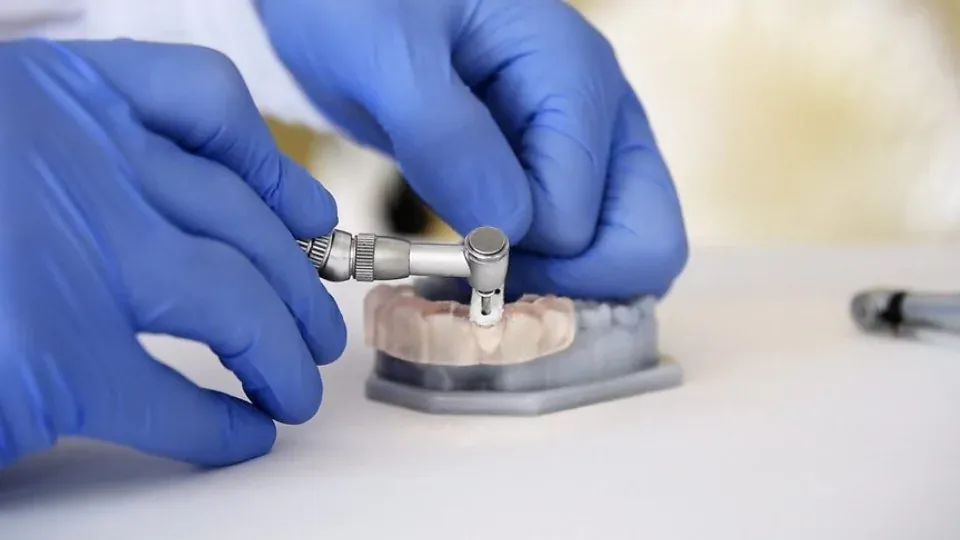
Most surgical guides today are manufactured using 3D printing technology. Dental labs use specialized printers capable of producing highly accurate resin guides with tolerances measured in microns.
The guide is printed using biocompatible, autoclavable resins approved for medical use. After printing, the guide undergoes post-processing including washing, curing under UV light, and insertion of metal drill sleeves.
Quality control checks ensure the guide fits the patient's anatomy perfectly and that all sleeves are positioned correctly. Only after passing inspection is the guide sterilized and sent to the dental practice. Submit your case online and receive your precision-manufactured guide within 3 to 5 business days.
Benefits of Using Surgical Guides: Why Precision Matters
The advantages of surgical guides extend far beyond simple accuracy improvements.
Enhanced Surgical Accuracy
Guided surgery consistently achieves implant placement accuracy within 2mm or less of the planned position. According to research published by the Journal of Oral Implantology, guided implant placement significantly reduces deviation compared to freehand techniques.
This level of precision protects vital anatomical structures, optimizes bone engagement, and creates ideal conditions for the final restoration.
Reduced Surgery Time and Patient Comfort
With clear guidance on exact implant position, surgical time decreases dramatically. Less time in the chair means less stress for patients and improved practice efficiency for dentists.
Faster, more precise surgery also means less tissue trauma. Patients experience reduced post-operative swelling, less discomfort, and quicker recovery times. Many guided surgeries can even be performed using a flapless technique, eliminating the need to pull back the gums entirely.
Improved Long-Term Outcomes
Proper implant positioning directly influences long-term success. Implants placed with optimal angulation distribute forces evenly, reducing stress on the bone and restoration. Correct depth placement maintains ideal bone levels around the implant neck, promoting healthy tissue integration.
Studies show that guided implant surgery results in lower failure rates compared to freehand placement. The predictability and precision simply translate to better outcomes over time. With affordable surgical guide pricing, the investment in guided surgery pays dividends through reduced complications and better patient satisfaction.
Confidence for Dentists and Patients
For dentists beginning to incorporate guided surgery into their practice, surgical guides provide an added layer of confidence. The guide takes much of the guesswork out of the procedure, allowing clinicians to focus on technique rather than constantly recalculating position.
For patients, seeing the detailed virtual plan and understanding how the guide works builds trust. They appreciate knowing that their implant placement will be carefully controlled rather than estimated during surgery.
How Surgical Guides Are Used During Implant Surgery
Understanding the clinical application helps demystify the entire process.
Pre-Surgical Preparation
Before surgery begins, the dental team confirms that the surgical guide fits properly. The guide is tried in the patient's mouth to verify a secure, stable fit. Any minor adjustments are made at this stage.
The surgical area is properly anesthetized, and the sterile guide is positioned. The surgeon ensures the guide seats completely and remains stable before beginning any drilling.
The Guided Drilling Process
With the guide in place, drilling begins through the metal sleeves. Each sleeve controls the drill path, preventing any deviation from the planned angle.
For pilot guides, the initial drill creates the entry point, after which the guide is removed for subsequent drilling. For fully guided systems, the guide remains in place through every drill diameter, ensuring complete adherence to the plan.
The guide's physical stop features can also prevent drilling too deep, adding an extra safety margin. This is particularly valuable near anatomical structures like the inferior alveolar nerve or maxillary sinus.
Implant Placement
Once the osteotomy (bone preparation) is complete, the implant itself is placed. In fully guided systems, the implant is inserted through the guide sleeve, following the exact planned position.
After placement, the guide is removed, and the surgical site is inspected. The implant is exactly where the digital plan intended, setting up ideal conditions for the final restoration.
Common Questions About Surgical Guides
Is guided surgery more expensive than traditional implant placement?
Surgical guides do add cost to the implant procedure, typically ranging from $250 to $450 for single-unit cases and $500 to $900 or more for multi-unit cases. However, the investment pays dividends in reduced complications, shorter surgery times, and better long-term outcomes. At Guided Excellence, we offer transparent pricing starting at $150, making precision guidance accessible for practices of all sizes.
How long does it take to receive a custom surgical guide?
Turnaround time varies by lab and case complexity. At Guided Excellence, our standard turnaround is 3 to 5 business days from approved digital plan to delivery. Rush options may be available for urgent cases.
Can surgical guides be used for all implant cases?
Surgical guides are appropriate for the vast majority of implant cases, from single tooth replacement to full-arch rehabilitation. Certain extreme anatomical limitations might require alternative approaches, but modern guide design accommodates most clinical situations.
Do I need special training to use surgical guides?
While surgical guides simplify implant placement, proper training is essential. Most guide manufacturers and dental labs, including Guided Excellence, provide instructional resources and support to help clinicians integrate guided surgery into their practice successfully.
Are surgical guides reusable?
Most surgical guides are designed for single-patient, single-use application. The biocompatible resins and precise fit are optimized for one surgical procedure. Attempting to reuse guides risks contamination and potential fit issues.
Getting Started with Surgical Guides at Guided Excellence
If you are ready to incorporate surgical guides into your implant practice, Guided Excellence makes the process straightforward.
Our Process
We accept standard DICOM files from your CBCT scanner and STL files from intraoral scans or digitized impressions. After uploading your patient data through our secure platform, our experienced team creates a detailed digital treatment plan.
You receive the virtual plan for review and approval. Our team collaborates with you to ensure every detail meets your clinical vision. Once approved, we manufacture your custom guide using precision 3D printing and ship it to your practice within 3 to 5 business days.
Why Choose Guided Excellence
Founded by Dr. Zareh Baghoomian, a practicing dentist with over 20 years of experience, Guided Excellence brings real clinical insight to every case. Every surgical guide receives personal review by Dr. Baghoomian, ensuring expert oversight from a clinician who understands the realities of implant dentistry.
Our transparent pricing starts at $150 with no hidden fees. We work with all major implant systems, providing flexibility for your practice. Fast turnaround times and dedicated support ensure your cases progress smoothly from planning to surgery.
Conclusion: Precision Dentistry Made Accessible
Surgical guides transform dental implant placement from an estimation-based procedure to a precision-guided science. For dentists beginning their guided surgery journey and patients seeking the best possible outcomes, understanding how surgical guides work removes uncertainty and builds confidence.
The technology is proven, the benefits are clear, and the process is more accessible than ever. With proper planning, quality guides, and expert support, every implant case can achieve the accuracy and predictability that patients deserve.
Ready to experience the precision and confidence that surgical guides provide? Contact Guided Excellence today at (626) 604-6504 or visit guided4excellence.com to submit your first case and discover how our dentist-designed guides can elevate your implant practice.