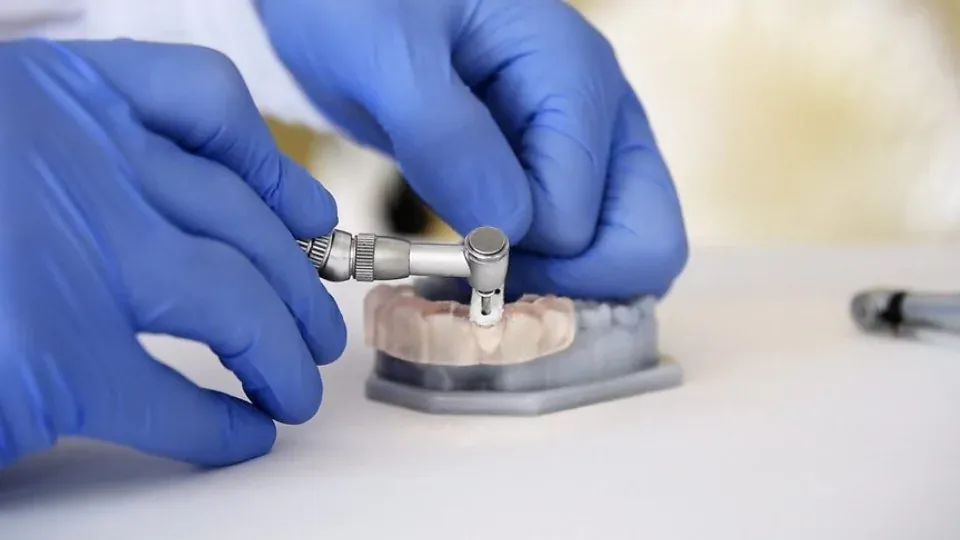

Dental implantology continues to evolve, and one of the most valuable tools in modern implant placement is the implant surgical guide. These guides not only enhance precision but also improve patient outcomes and streamline surgical workflows. However, with multiple types available, choosing the right one for your practice can be a challenge.
In this post, we'll explore the main types of implant surgical guides and discuss which is best suited to various clinical scenarios.
1. Non-Limiting (Pilot) Surgical Guides
Non-limiting guides are used to direct only the initial pilot drill. The rest of the osteotomy is completed freehand.
Best for:
- Experienced implantologists
- Cases where anatomy is straightforward
- Practices looking for flexibility in surgical technique
Pros:
- Quick and cost-effective
- Allows intraoperative adjustments
Cons:
- Less control during deeper osteotomy and implant placement
- Requires high clinician skill and precision
2. Partially Limiting Surgical Guides
These guides help with several initial drills but do not control the full osteotomy depth or angulation.
Best for:
- Intermediate-level practitioners
- Cases needing moderate guidance without full restriction
Pros:
- Greater accuracy than pilot-only guides
- Maintains some flexibility
Cons:
- Still relies on manual precision for final placement
3. Completely Limiting (Fully Guided) Surgical Guides
Fully guided systems control every step—depth, angulation, and position—for the entire drilling sequence and implant placement.
Best for:
- High-precision needs
- Complex cases (e.g., limited bone, proximity to anatomical structures)
- Digital workflow practices
Pros:
- Maximum accuracy and safety
- Predictable outcomes
- Compatible with digital planning and CAD/CAM systems
Cons:
- Higher cost
- Requires extensive planning and lab coordination
4. Bone-Supported Guides
These guides rest directly on the bone surface and are often used in edentulous patients.
Best for:
- Fully edentulous cases
- Patients with poor mucosal support
Pros:
- Stable and accurate
- Useful for flap surgeries
Cons:
- Requires flap elevation
- More invasive than mucosa- or tooth-supported guides
5. Tooth-Supported Guides
These guides rest on the remaining teeth and offer excellent support and precision.
Best for:
- Partially edentulous patients
- Straightforward cases
Pros:
- Stable and easy to place
- Minimally invasive
Cons:
- Limited use in patients with poor dentition
6. Mucosa-Supported Guides
Used in fully edentulous cases, these guides rest on the soft tissue.
Best for:
- Edentulous patients with sufficient mucosal support
Pros:
- Non-invasive
- Comfortable for the patient
Cons:
- Requires accurate impressions or scans
- Less stable than bone- or tooth-supported guides
Choosing the Right Guide for Your Practice
The right implant surgical guide depends on your experience, case complexity, technology access, and treatment philosophy. A practice focused on precision and digital workflow might benefit from fully guided systems, while a seasoned surgeon may prefer the flexibility of a pilot guide.
Final Thought: Adopting the appropriate guide type can dramatically improve your surgical accuracy, patient satisfaction, and clinical outcomes. Invest in training and technology that aligns with your practice goals.