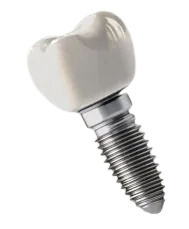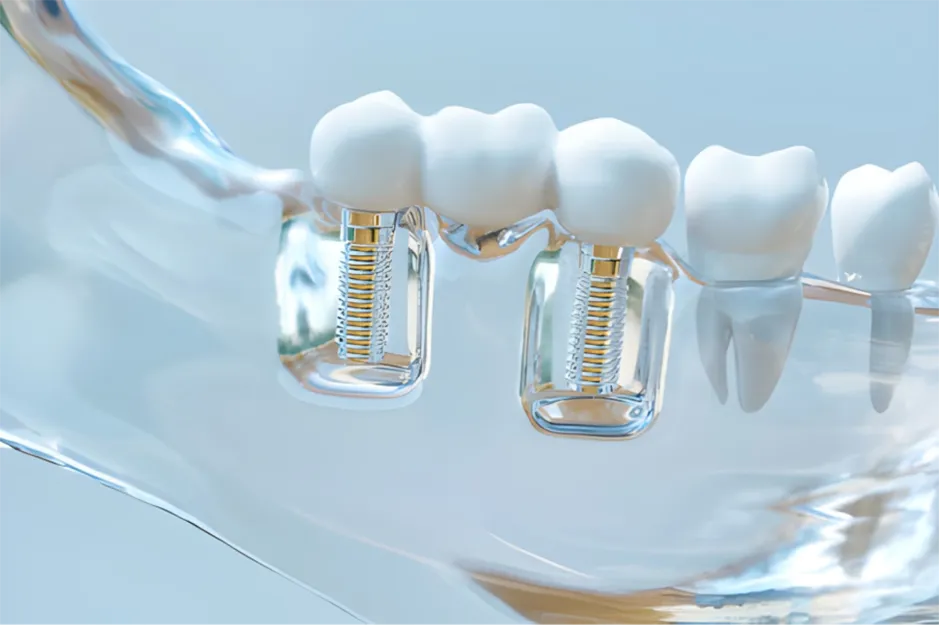

Dental implant surgery has transformed dramatically over the past decade. Today, 3D guided implant surgery represents the gold standard for precision, safety, and predictability in implant dentistry. This advanced approach combines digital planning with custom-fabricated surgical guides to deliver outcomes that traditional freehand techniques simply cannot match.
3D guided implant surgery is a digital workflow that uses cone beam computed tomography (CBCT) scans, specialized planning software, and a 3D printed implant surgical guide to place dental implants with exceptional accuracy. Unlike traditional freehand placement, guided implant surgery benefits include precise control over implant position, angle, and depth.
The process starts with a 3D scan of your jaw. Your dentist plans the exact position of each implant virtually, considering bone density, nerve locations, sinus cavities, and the final restoration. A custom surgical guide is then created - a physical template that directs the drill to the exact planned location.
How 3D Guided Implant Surgery Minimizes Risk and Improves Patient Outcomes
One of the most compelling reasons to choose digital dental implant surgery is risk reduction. Dental implant placement involves drilling into bone near vital structures like nerves and blood vessels. Even small deviations can lead to complications.
Here's how 3D printed implant surgical guides minimize these risks:
Prevents Nerve Damage
The inferior alveolar nerve runs through the lower jaw and can cause numbness, pain, or permanent nerve damage if an implant is placed too close. With guided surgery, the exact distance from the nerve is calculated during planning. The guide ensures the drill stops at a safe depth, eliminating guesswork.
Avoids Sinus Perforation
In the upper jaw, the maxillary sinuses sit just above the bone. Drilling too deep can perforate the sinus membrane, leading to infection or implant failure. Guided templates control both the angle and depth of drilling, keeping implants safely within the bone.
Protects Adjacent Teeth
Placing implants too close to neighbouring teeth can damage their roots. Digital planning identifies safe zones, and the surgical guide maintains that safe distance throughout the procedure.
Reduces Bleeding and Trauma
Because the guide directs the drill precisely, there's less need for extensive tissue reflection or bone removal. This means less bleeding, reduced post-operative swelling, and faster healing.
Clinical Benefits: Why Precision Matters for Patient Outcomes
Beyond safety, 3D guided implant surgery offers tangible clinical advantages that directly impact your experience and long-term results.
Shorter Surgery Time
When your dentist knows exactly where to drill and how deep to go, the procedure moves quickly. Studies show that guided surgery can reduce chair time by 30-40% compared to freehand techniques. Less time in the chair means less stress and discomfort for you.
Improved Implant Stability
Proper angulation and positioning are critical for implant success. Guided surgery ensures implants are placed in the densest bone at the optimal angle, translating to better stability and higher long-term success rates.
Predictable Aesthetic Results
For front teeth, aesthetics matter as much as function. The surgical guide ensures implants are positioned to support natural-looking crowns with proper gum contours. Digital planning helps avoid compromising the final appearance.
Comparing Guided vs. Freehand Implant Surgery
To truly understand the value of 3D guided implant surgery, it helps to see how it compares to traditional methods. Here's a side-by-side comparison:
| Factor | 3D Guided Implant Surgery | Freehand Implant Surgery |
|---|---|---|
| Planning Accuracy | Virtual 3D planning with exact measurements | Based on 2D X-rays and clinical judgment |
| Surgical Precision | Controlled by physical guide; deviation <1mm | Dependent on surgeon skill; deviation up to 3-5mm |
| Risk of Complications | Significantly lower due to pre-planned safety margins | Higher risk of nerve damage, sinus perforation |
| Surgery Time | 30-40% faster on average | Longer due to trial-and-error adjustments |
| Post-Op Recovery | Minimal swelling and discomfort; often flapless | More tissue trauma; longer healing time |
| Long-Term Success Rate | 95-98% success rate | 90-95% success rate |
The data speaks for itself. While skilled surgeons can achieve excellent results with freehand techniques, guided surgery removes variables and delivers consistent, predictable outcomes.
The Technology Behind 3D Printed Implant Surgical Guides
The workflow involves three key components:
CBCT Imaging
A CBCT scan captures a 3D image of your jaw, showing bone structure, nerve pathways, and sinus cavities in detail. The role of CBCT imaging is foundational for digital planning.
Digital Treatment Planning Software
Specialized software allows your dentist to virtually place implants in the ideal position, measuring distances and simulating the final restoration before any drilling begins.
3D Printing of Surgical Guides
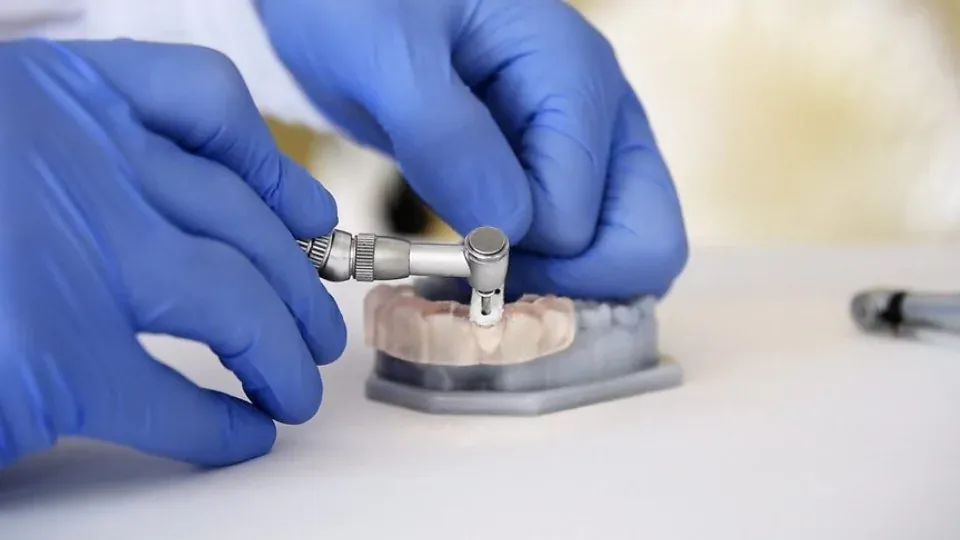
Custom guides are fabricated using biocompatible resin and precision 3D printing by experienced professionals. Companies like Guided Excellence specialize in creating these guides with exacting standards.
When Is Guided Surgery Recommended?
While 3D guided implant surgery can benefit virtually any implant case, it's particularly valuable in certain situations:
| Clinical Scenario | Why Guided Surgery Is Essential |
|---|---|
| Multiple Implants | Ensures proper spacing and parallelism between implants |
| Full-Arch Restorations (All-on-4) | Critical for accurate placement in limited bone |
| Complex Anatomy | Manages patients with limited bone or unusual nerve positioning |
| Immediate Loading Cases | Precise placement supports same-day temporary restorations |
| Aesthetic Zone (Front Teeth) | Guarantees optimal positioning for natural appearance |
Your dentist will assess your specific case and recommend whether guided surgery is appropriate. In most modern practices, it's becoming the standard approach rather than the exception.
Choosing the Right Provider for Guided Implant Surgery
Not all guided surgery is created equal. The success of your procedure depends on both the technology and the expertise behind it. Here's what to look for:
Experience with Digital Workflows
Ask your dentist how many guided cases they've completed. Experience with digital planning software and surgical guides makes a significant difference in outcomes.
Quality of Surgical Guides
The guide itself must be accurate and well-designed. Look for providers who work with experienced dental laboratories like Guided Excellence, where guides are designed by practicing dentists with over 20 years of experience.
Comprehensive Planning
Your dentist should spend time reviewing the digital plan with you, showing you exactly where the implants will be placed and explaining the reasoning behind each decision.
The Future of Implant Dentistry Is Here
3D guided implant surgery isn't experimental - it's the present and future of implant dentistry. The combination of digital planning, precision engineering, and minimally invasive technique delivers safer procedures, better outcomes, and faster recovery.
Understanding how surgical guides work and learning about different types of surgical guides can further enhance your knowledge about this advanced approach to implant dentistry.
Modern dentistry has given us remarkable tools. 3D guided implant surgery is one of the most significant advances in recent decades. Your smile and your peace of mind deserve nothing less than the precision and safety that guided surgery provides.
Ready to learn more about how 3D printed surgical guides can improve your implant procedure? Contact Guided Excellence to discuss your case with experienced professionals who specialize in precision dental implant planning and surgical guide design.