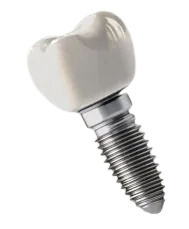

No two patients present identical implant challenges. Bone density varies, anatomical landmarks differ, and prosthetic requirements change from case to case. A custom implant surgical guide addresses these variables by translating your patient's unique anatomy and treatment objectives into a precise surgical roadmap.
Many practitioners recognize that guided surgery improves accuracy, but fewer understand how guide customization directly impacts clinical outcomes. When design factors align properly, your surgical guides for dental implants become genuine extensions of your treatment planning rather than simple positioning tools.
This guide examines the critical customization factors that separate adequate surgical guides from exceptional ones. You will learn which anatomical variables drive design decisions, how material selection affects surgical execution, and what customization parameters matter most for predictable outcomes.
Patient-Specific Anatomical Considerations
Every custom implant surgical guide begins with patient-specific anatomical data acquisition and analysis. The quality of this data directly determines how well the final guide addresses your case's unique challenges.
CBCT Imaging Quality Matters Significantly
CBCT scans provide volumetric bone data essential for evaluating cortical thickness, trabecular density patterns, and proximity to critical anatomical structures. However, voxel resolution impacts the anatomical detail available for guide design.
Scans acquired at 0.3mm voxel size or larger introduce volumetric averaging that obscures fine bone contours. This becomes critical in the aesthetic zone where millimeter-level precision determines long-term soft tissue outcomes.
For anterior implants and immediate placement cases, 0.1 to 0.2mm resolution reveals the subtle anatomical variations that inform sleeve positioning and angulation decisions.
Intraoral Scan Accuracy Affects Guide Stability
Surface scan data must capture not only tooth morphology but also soft tissue contours that influence guide stability and seating. Inadequate tissue detail forces the design process to rely on assumptions rather than actual patient anatomy.
When scan data shows tissue undercuts or surface irregularities, your custom dental surgical guide design can incorporate features that work with these anatomical realities rather than against them.
Registration Accuracy Prevents Compounding Errors
Precise DICOM-STL alignment ensures the planned implant position relates accurately to both underlying bone and the intended prosthetic outcome. Misalignment of even 0.5mm at registration compounds through the workflow, potentially placing the guide sleeve several millimeters from the intended trajectory.
Custom guides account for this by incorporating multiple anatomical reference points and, when necessary, fiducial markers that provide unambiguous alignment verification.
Support Type Selection and Design Optimization
Guide stability during surgery depends fundamentally on support type and how well it is customized to match your case characteristics. Tooth-supported, tissue-supported, and bone-supported guides each offer distinct advantages.
Tooth-Supported Guides Provide Superior Stability
These guides leverage direct contact with rigid dental structures, making them ideal for partially edentulous cases where sufficient adjacent dentition exists. However, effective design requires more than simply creating a guide that sits on teeth.
The guide's tissue-facing surface must account for soft tissue thickness variations. Tooth contact should provide primary support while tissue contact serves only to prevent rocking or rotation.
Tissue-Supported Guides Require Careful Customization
Soft tissue compresses and rebounds under pressure, creating stability challenges. The guide must distribute forces across maximum tissue surface area while incorporating anatomical features that prevent lateral movement during drilling.
Your digital planning workflow for these cases should identify stabilization features like:
- Tissue undercuts: Mechanical retention features that improve seating stability.
- Palatal vault contour adaptation: Broad support for maxillary edentulous cases.
- Vestibular depth engagement: Additional resistance against lateral movement.
- Extended tissue contact zones: Wider surface distribution to reduce compression effects.
Bone-Supported Guides Address Full-Arch Cases
Used primarily in edentulous cases, these guides require surgical exposure and direct bone contact for stability. Custom guide design should specify fixation screw positions that engage the most stable bone available.
When bone quality varies across the arch, such as dense anterior cortical bone transitioning to spongy posterior regions, customization prevents guide movement during sequential drilling protocols.
Material Selection for Case-Specific Requirements
Surgical guide material properties directly affect drilling performance, heat dissipation, and guide longevity. A custom implant surgical guide optimized for material selection matches resin properties to your case's mechanical demands.
Standard Resins Work for Simple Cases
Surgical guide resins meeting ISO 10993 biocompatibility standards work adequately for straightforward single-implant cases with minimal drilling time. However, case complexity introduces variables that demand more careful material consideration.
Rigidity Under Force Maintains Accuracy
Flexible guide materials deflect when lateral drilling forces are applied, particularly in the posterior mandible where dense cortical bone requires substantial force for adequate osteotomy preparation.
This deflection introduces angular deviation that compounds with drilling depth. Custom guides for these anatomical regions benefit from higher modulus resins that resist deflection, maintaining the planned trajectory even under maximum drilling force.
Geometry Optimization Balances Performance and Usability
A custom guide designed with appropriate wall thickness in critical areas, typically 2 to 3mm around sleeve positions, provides structural stability. Thinner cross-arch connector regions maintain flexibility for seating in cases with moderate tissue undercuts.
| Customization Factor | Why It Matters | Clinical Impact |
|---|---|---|
| CBCT Resolution | Captures fine bone contours and anatomical details | Improves planning accuracy in aesthetic and immediate cases |
| Support Type | Controls guide seating and stability | Reduces movement during drilling |
| Material Rigidity | Resists flexing under drilling force | Maintains planned angulation and depth |
| Sleeve Offset | Balances drill clearance with angular control | Prevents binding while limiting deviation |
Sleeve Configuration and Offset Customization
The metal sleeve that guides your drill represents the critical interface between digital planning and surgical execution. Sleeve design customization determines how accurately the physical osteotomy matches your virtually planned implant position.
Sleeve Length Affects Drilling Stability
Standard 6mm sleeves work for most applications, but customization opportunities exist:
- Extended-length sleeves: Provide additional stabilization when guide thickness alone cannot ensure adequate drill shaft support.
- Shorter sleeves: Work when vertical dimension limitations exist, such as full-arch cases with limited interarch space.
- Custom lengths: Accommodate specific anatomical constraints or implant system requirements.
Offset Distance Critically Affects Angular Accuracy
Most implant systems recommend offset specifications between 0.15mm and 0.25mm. However, customization allows offset adjustment based on your specific implant system, drill design, and bone density expectations.
Insufficient offset causes binding that prevents proper drill advancement. Excessive offset permits angular deviation that increases with drilling depth. For a 10mm deep osteotomy, even 0.1mm of additional offset can introduce 1 to 2 degrees of angular deviation.
Sleeve Angulation Addresses Complex Anatomy
While most cases benefit from sleeves perpendicular to the tissue surface, some anatomical scenarios require custom angulations:
- Immediate placement cases: Extraction sockets may need angulation accounting for socket wall irregularities.
- Full-arch cases: Severe ridge resorption may require angulations where standard perpendicular sleeves interfere with drill access.
- Complex anatomy: Custom angulation maintains the intended trajectory while accommodating anatomical limitations.
Sleeve-to-Sleeve Spacing Optimizes Multiple-Implant Cases
Optimal spacing maintains adequate interseptal bone while providing sufficient mesiodistal dimension for proper emergence profile development. When bone width limitations exist, customized sleeve positioning maximizes available bone use while maintaining minimum distance requirements.
Immediate Placement and Complex Case Modifications
Custom implant surgical guides designed for immediate placement protocols face unique challenges that demand specific design modifications beyond standard delayed placement approaches.
Socket-Based Planning Requires Adaptive Design
Socket wall irregularities after extraction rarely match the pre-extraction tooth root form shown in your CBCT scan. Thin buccal plates fracture during extraction, root dilacerations create geometric variations, and residual granulation tissue alters socket morphology.
A properly customized immediate placement guide incorporates design features that permit controlled position adjustment if socket anatomy differs from predictions. This might include slightly oversized sleeve openings or partial-depth sleeve designs that guide initial drilling while permitting socket-adaptive final positioning.
Support Type Selection Becomes Critical
Tooth-supported designs using adjacent teeth avoid reliance on extraction socket soft tissue that may not provide stable guide retention. When adjacent tooth support is not available, tissue-supported guides must account for disrupted tissue architecture around the extraction site.
Full-Arch Cases Require Stackable Guide Designs
Stackable guides allow sequential bone reduction, implant placement, and verification steps within the same surgical appointment. Each guide layer requires precise registration features ensuring accurate repositioning after removal for drilling or implant insertion.
Custom registration features might include:
- Anatomical locks: Features that use stable bone or tissue contours for repeatable positioning.
- Pin-based repositioning systems: Fixation references that preserve guide orientation across surgical stages.
- Cross-arch stabilization elements: Structures that reduce flexure and rotation.
- Reference markers: Visual orientation aids for consistent guide placement.
Digital Workflow Integration and Quality Verification
The effectiveness of customization depends fundamentally on workflow integration that maintains design intent through every stage from planning to clinical delivery.
CAD/CAM Software Capabilities Enable Customization
Advanced planning platforms allow detailed sleeve configuration control, material specification, support type optimization, and guide geometry refinement based on anatomical constraints. However, software capabilities mean little without trained operators who understand both technical parameters and clinical implications.
Quality Verification Prevents Clinical Problems
Multiple workflow stages require verification:
- Registration accuracy verification: Confirm DICOM-STL alignment immediately after scan merging.
- Guide design review: Evaluate sleeve positioning relative to anatomical structures.
- Support surface adequacy assessment: Confirm the guide has enough stable contact area.
- Physical model verification: Use 3D printed anatomy representations for complex cases.
Fabrication Quality Control Ensures Accuracy
3D printing parameters affect dimensional accuracy, material properties, and surface finish characteristics. Post-processing protocols including washing, curing, and finishing steps must follow manufacturer specifications to achieve intended material properties and biocompatibility.
Clinical Delivery Completes the Workflow
Clear communication about case-specific design features ensures you understand which customization parameters were implemented and how they affect surgical execution. At Guided Excellence, Dr. Zareh Baghoomian personally reviews complex customization cases to ensure design decisions align with clinical realities and surgical execution requirements.
Conclusion
Custom implant surgical guide success ultimately depends on matching design specifications to case requirements through systematic evaluation of anatomical variables, surgical objectives, and restorative demands.
Generic approaches may work adequately for straightforward cases, but customization separates acceptable results from optimal outcomes when anatomical complexity, aesthetic requirements, or surgical challenges increase.
Understanding which customization parameters affect your outcomes and knowing how to specify design requirements that address your case's unique challenges transforms surgical guides from positioning templates into precision instruments.
At Guided Excellence, every surgical guide is designed with case-specific customization as the fundamental principle. Our streamlined digital planning process evaluates your anatomical data, restorative objectives, and surgical preferences to create guides that address your unique requirements.
Dr. Baghoomian's personal involvement in complex case planning ensures that customization decisions reflect both technical precision and clinical judgment developed through years of hands-on implant experience. Submit your case online today to experience how personalized precision improves outcomes when customization is executed correctly.