CBCT-based surgical guide design
Digital Dental Implant Planning and Surgical Guide Design
G4E delivers clinician-ready surgical guides designed from CBCT scans—tooth-supported, tissue-supported, and bone-supported. Every case, guided.
Every case reviewed by Dr. Zareh Baghoomian Nationwide service across the US
- You send
- CBCT (DICOM), intraoral or model scan (STL), implant system
- You approve
- The 3D treatment plan, before anything is printed
- You receive
- A patient-specific guide, planned only or printed and shipped
Who it’s for
Built for Every Implant Professional
Whether you’re a general dentist, an oral surgeon, or a dental lab, G4E’s surgical guide design service fits your workflow.
Single & Multiple Implants
Tooth-supported guides for cases with stable remaining teeth, with patient-specific planning for implant placement.
Send Scans, We Plan
Submit your CBCT and STL files. Our team reviews the case and develops the proposed treatment plan.
A Clear Review Process
Review the plan and request changes before the guide is finalized.
Full-Arch & Complex Cases
Discuss full-arch All-on-X cases, fixation, and guide support with our clinical team.
Prosthetic-Driven Planning
Plan implant positions with the intended restoration and patient anatomy in view.
CBCT + STL Workflow
Combine CBCT DICOM data with digital impressions for patient-specific planning.
Planning & Printing Options
Our published pricing separates planning and printing. Confirm the deliverables needed for your lab workflow.
Coordinate the Case
Work with the treating clinician and our team to confirm the implant system and approved plan.
Discuss Your Workflow
Contact us about your case volume, file requirements, and production needs.
The short answer
What Is Dental Surgical Guide Design?
Dental surgical guide design is the process of creating a patient-specific template that translates a digital implant plan into physical guidance for surgery. CBCT scan data (DICOM) and digital impressions (STL) support planning of implant position and guide fit. Guides can be tooth-supported, tissue-supported, or bone-supported depending on the clinical situation.
What we plan from
- CBCT scan (DICOM)
- Bone, nerve and sinus anatomy in 3D
- Intraoral or model scan (STL)
- Teeth and soft-tissue surface for fit
- Implant system and guided kit
- Confirmed for compatibility before the plan is final
Why Guided Excellence
Why Choose G4E for Dental Surgical Guide Design
The experience behind every plan we design.
- Surgical guides planned
- 11,000+
- Planning experience across single-tooth, multi-unit and full-arch cases.
- Years of clinical experience
- 23+
- Led by Dr. Zareh Baghoomian, a practicing implant dentist who reviews every case.
- Compatible implants
- 100+
- Tell us your system and kit. We confirm compatibility before the plan is final.
- Planning turnaround
- <3 days
- From complete scan data to a treatment plan ready for your review.
Our process
From Scan to Surgery-Ready in 4 Steps
One plan, referenced from your scans to the finished guide. The plan stays a draft until you sign it off.
Step 1: Submit Your Case
Upload your CBCT scan (DICOM), intraoral or model scan (STL), implant system and treatment details through our secure case portal.
Step 2: Virtual Treatment Plan
Implant positions are planned from the intended restoration and checked against bone, nerve and sinus anatomy on your scans.
Step 3: Your approval
Plan Review & Approval
Review the 3D plan and request any changes to position, angle or depth. Nothing is printed until you approve it.
Step 4: Guide Design & Delivery
The approved plan becomes a patient-specific guide. Planning and printing are priced separately, so you choose what you need.
Plan in draft Approved plan in production
Most guides ship within 3 to 5 business days after you approve the plan.
Start your case securelyGuide types & pricing
Which Surgical Guide is Right for Your Case?
The right support type depends on the teeth that remain, the soft tissue and the bone available. We help you choose during planning.
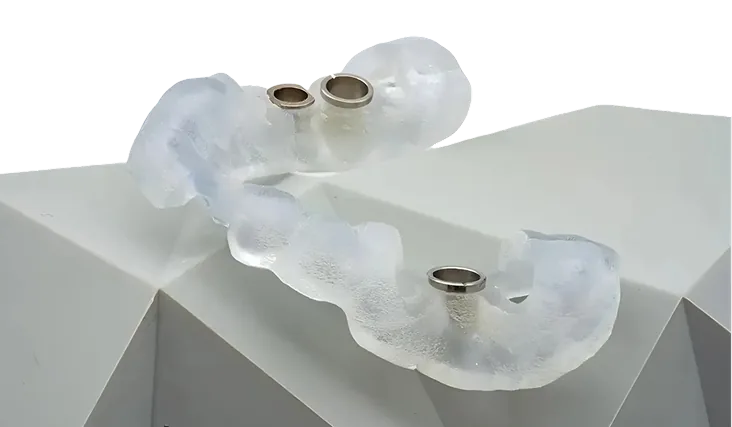
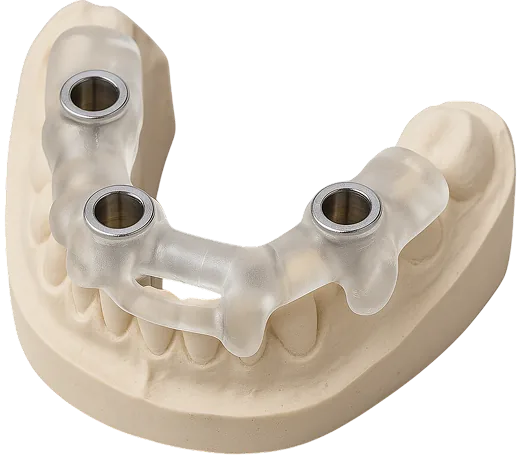
Tooth-Supported Guides
Also called tooth-borne
- Rests on
- The patient’s remaining teeth
- Best for
- Single-tooth and short-span cases
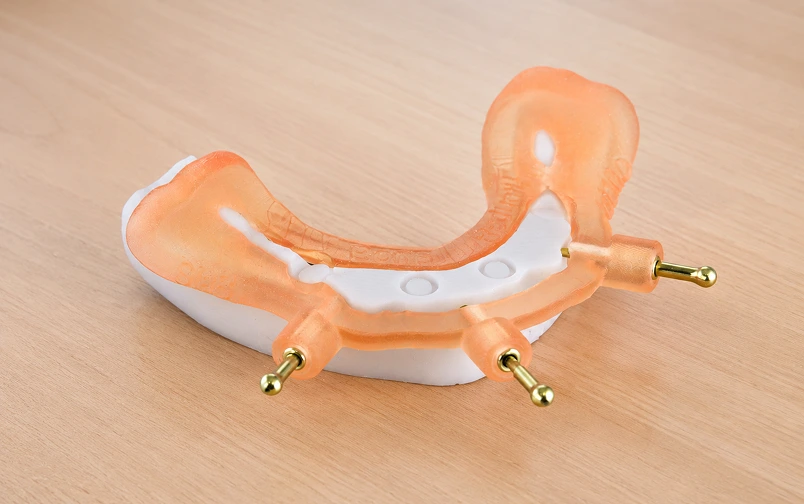
Tissue-Supported Guides
Also called mucosa-borne
- Rests on
- Soft tissue, stabilized with fixation pins
- Best for
- Fully edentulous arches and flapless protocols
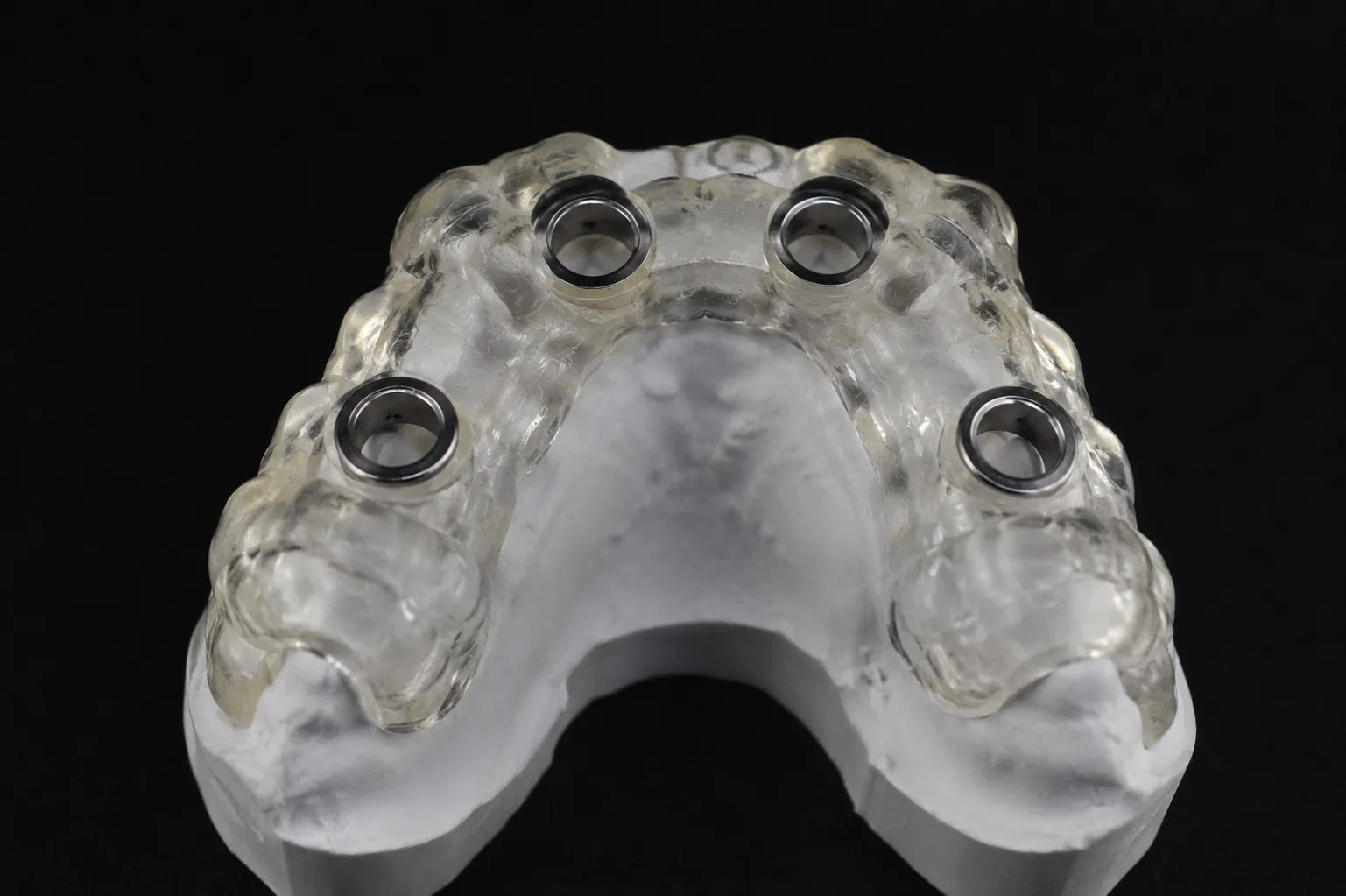
Bone-Supported Guides
Also called bone-borne
- Rests on
- The jawbone, after a flap is raised
- Best for
- Edentulous and complex full-arch cases
Also available: hybrid guides, pilot and fully guided templates, and stackable full-arch guides.
Published pricing per case
Priced by the number of implants. Planning and printing are listed separately, so you pay only for what you need.
See full pricing details| Implants per case | Planning | Printing | Planning + printingTotal |
|---|---|---|---|
| 1 | $150 | $145 | $295 |
| 2 | $180 | $200 | $380 |
| 3 | $210 | $225 | $435 |
| 4 | $270 | $245 | $515 |
| 5 | $290 | $255 | $545 |
| 6 | $310 | $265 | $575 |
| Edentulous guide | $350 | $300 | $650 |
Compatibility
Works With the Systems and Software You Already Use
Implant systems, scanners, planning software and printers our guides are planned around.














Clinical benefits
Advantages of Custom Dental Surgical Guides
Custom guides combine digital planning with your patient’s own anatomy.
Superior accuracy
Guides are based on detailed digital scans, so implants are positioned as planned.
Enhanced safety
Planned angulation and depth help reduce the risk of nerve injury, sinus perforation and improper angulation.
Efficient procedures
Streamlined surgeries reduce chair time and improve patient comfort.
Predictable healing
Accurate placement supports osseointegration and better long-term outcomes.
How we work
Technology Behind Dental Surgical Guide Design
Our dental guide design lab for implant surgery leverages state-of-the-art technologies for precision and reliability.
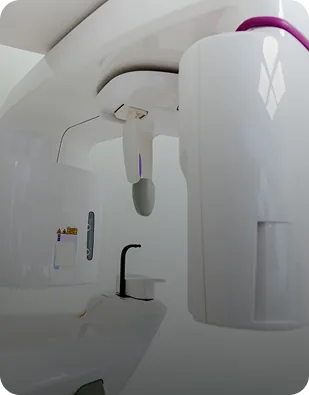
3D CBCT scanning
High-resolution 3D imaging for anatomical accuracy.
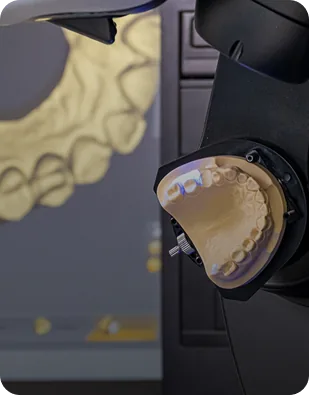
Digital impressions
Intraoral scan fusion for fit precision.
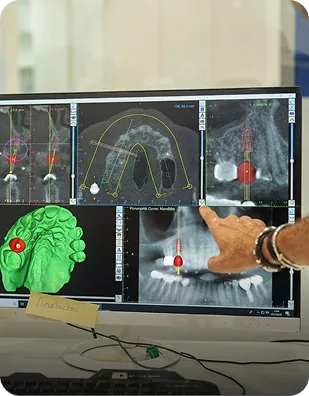
CAD/CAM design software
Computer-aided guide design for exact drill angulation and depth.
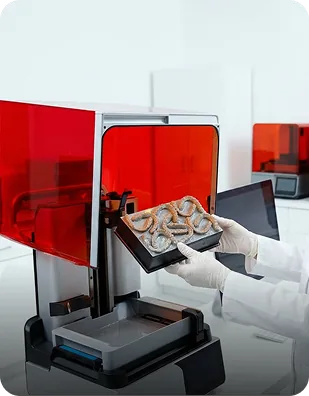
High-precision 3D printing
Biocompatible materials and high-precision printers for guide production.
Beyond implant placement
Guided Apicoectomy Surgery Using 3D Surgical Guide Technology
While 3D printed surgical guides are most widely recognized for dental implant placement, the same digital planning and guide-based technology is now transforming complex endodontic procedures.
Guided apicoectomy surgery is an advanced form of guided endodontic surgery that combines CBCT imaging, digital treatment planning, and custom 3D printed surgical guides to perform root-end procedures with exceptional accuracy. Also referred to as guided apical surgery or guided endodontic microsurgery, this technique represents the modern evolution of traditional apicoectomy.
Instead of relying on freehand access, clinicians use computer-assisted planning and precision guides to locate and treat the root tip with minimal disruption to surrounding bone and soft tissue.
How Guided Apicoectomy Works
- CBCT data acquisition High-resolution 3D scans capture the tooth structure and surrounding anatomy in detail.
- Virtual surgical planning Specialized software allows precise planning of depth, angulation, and entry point for root-end access.
- Custom guide design & 3D printing A patient-specific surgical guide is digitally designed and manufactured to fit securely over the treatment area.
- Guided surgical execution During the procedure, the guide directs instruments to the planned location, improving surgical control.
Clinical Benefits of Guided Endodontic Microsurgery
- Higher precision Accurate access to the root tip
- Minimally invasive approach Conservative bone removal and tissue preservation
- Standardized digital workflow Consistent planning across complex cases
- Improved patient comfort Shorter procedures and faster recovery
Guided vs Traditional Apicoectomy
- Greater accuracy Reduces the risk of over-penetration or missed root tips, especially near the sinus or mandibular nerve
- Smaller surgical access Enables conservative osteotomies and optimized resection angles
- Reduced surgical time Faster execution once planning is complete

Clinician-led planning
Consult Directly with Dr. Zareh Baghoomian
Submit your case now or book a free consultation with Dr. Zareh Baghoomian to experience the power of expertly designed surgical guides.
From dentists we work with
What Dentists Are Saying
“These surgical guides have completely transformed the way I perform implant surgeries! Knowing they are designed by a clinical dentist with over 24 years of experience gives me total confidence in their precision and reliability!”
“The accuracy of these guides is second to none! My surgeries are faster, my patients heal better, and the fact that they're created by a seasoned clinical dentist makes all the difference!”
“Absolutely game-changing! The guides are incredibly precise, and the customer service is outstanding. Having a designer who truly understands the clinical challenges we face sets this service apart from the rest!”
Frequently asked questions
Everything You Need to Know
Can’t find your answer? Call 626.604.6504 or send us a question.
What file formats do you need for surgical guide design?
Submit a CBCT scan in DICOM format and a digital impression or model scan in STL format, together with your implant system and treatment details. Use our secure case-submission portal for patient scans.
How long does dental surgical guide design take?
Our planning turnaround is under 3 days once we have complete scan data. Most guides ship within 3 to 5 business days after you approve the plan. Complex cases can take longer, so confirm the schedule with our team before booking surgery.
Do you offer design-only service or do you also print the guide?
Our pricing lists planning and printing separately. Contact our team to confirm the planning-only deliverables for your workflow, or choose planning and printing for a physical guide.
What material are the surgical guides made from?
Our guides are produced using biocompatible materials intended for intraoral use. Ask our team for the material-specific preparation and sterilization instructions supplied with your guide.
Can G4E design surgical guides for full-arch implant cases?
Yes. We support full-arch All-on-X cases with patient-specific planning and guide designs, including stackable guides. The support and fixation approach is selected for the clinical situation. Discuss complex cases with our team before submission.
How does dental surgical guide design support implant placement?
The guide translates a reviewed digital treatment plan into a physical template that controls drill position and direction. Guidance depends on the guide and drill protocol selected; clinical assessment and verification remain essential.
Free consultation
Start Your Case Today — Free Consultation
Tell us about your practice and the case you are planning. Our team will reply with the next step.
Already have your CBCT and scans? Upload them through secure case submission, which collects the patient, clinician and file details we need to plan your guide.
Submit Your Case Securely- 626.604.6504
- guideme@guided4excellence.com
- Nationwide service across the US