
As dental implant technology evolves, clinicians are increasingly presented with options that enhance precision, efficiency, and patient outcomes. Two of the most innovative solutions are static surgical guides and dynamic navigation systems. While both methods are designed to increase the accuracy of implant placement, they do so in fundamentally different ways.
This post compares dynamic navigation vs. static surgical guides, outlining their clinical differences, benefits, and considerations—so you can determine which is right for your implant practice.
Understanding the Basics
Static Surgical Guides
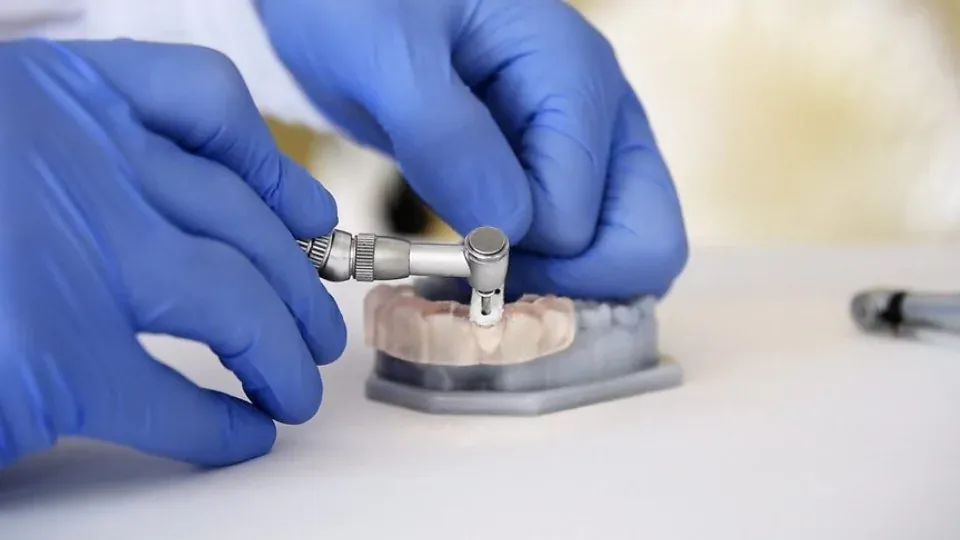
Static guides are pre-fabricated templates, designed using 3D imaging and CAD/CAM technology. They fit over the patient's teeth, mucosa, or bone and direct the drill along a predetermined path. These guides are created based on digital planning, and once fabricated, they do not allow changes during surgery.
Dynamic Navigation Systems
Dynamic navigation is a real-time computer-assisted system that uses tracking technology (similar to GPS) to guide the surgeon during implant placement. A CBCT scan is combined with real-time visualization of the drill's location on a monitor, allowing for adjustments mid-procedure.
Clinical Accuracy and Precision
Static Guides
- Provide highly accurate results when fabricated and seated properly.
- Rely on excellent fit and stability to ensure positional accuracy.
- Accuracy may diminish if the guide shifts, the patient moves, or the guide is not seated correctly.
- Once fabricated, no real-time changes can be made.
Dynamic Navigation
- Offers real-time guidance, allowing adjustments based on surgical findings (e.g., unexpected bone quality or anatomical variation).
- Allows the clinician to visually track the drill's position, angle, and depth during surgery.
- Accuracy depends on proper calibration, steady hand-eye coordination, and a clear field of view on the navigation screen.
Winner: Both systems provide high accuracy, but dynamic navigation offers superior flexibility and real-time error correction.
Intraoperative Flexibility
Static Guides
- Completely pre-planned; no deviation from the plan is possible during surgery.
- Ideal for straightforward cases where bone and soft tissue conditions are well known.
- If unexpected complications arise, the surgeon may need to remove the guide and revert to freehand surgery.
Dynamic Navigation
- Allows on-the-fly decision making during surgery.
- Enables the clinician to respond to changes in bone density, unexpected anatomical features, or flap elevation.
- Valuable in complex or unpredictable cases.
Winner: Dynamic navigation provides greater adaptability, particularly in variable or high-risk scenarios.
Surgical Workflow and Time
Static Guides
- Require time-intensive pre-surgical planning and fabrication.
- Typically involve multiple appointments (scanning, planning, printing).
- Surgical procedures are often faster once the guide is ready, especially for flapless cases.
Dynamic Navigation
- Requires equipment setup and calibration before each surgery.
- Eliminates the need for printing or lab coordination.
- May take more time during surgery, especially early in the learning curve.
Winner: Static guides offer quicker procedures once planned but require longer lead time; dynamic navigation offers immediate use without lab work, though with potentially longer chair time.
Cost and Investment
Static Guides
- Involves per-case costs for design, fabrication, and potentially outsourcing.
- Economical for low-volume or occasional implant cases.
- Requires digital impressions and access to CAD/CAM or lab services.
Dynamic Navigation
- High upfront investment in hardware and software.
- No recurring cost per case.
- Becomes more cost-effective with high case volume.
Winner: Static guides are lower cost per case, while dynamic navigation offers better value for high-volume implant practices.
Learning Curve and Training
Static Guides
- Easier to learn and use with minimal training.
- Appeals to practitioners new to digital workflows or those who prefer hands-on planning.
Dynamic Navigation
- Requires significant training and practice.
- Involves mastering eye-hand coordination and software interface.
- Has a longer learning curve but offers more versatility long-term.
Winner: Static guides are beginner-friendly, but dynamic navigation rewards committed users with more control and versatility.
Clinical Scenarios: Which to Choose?
Use Static Guides when:
- The case is straightforward with adequate bone volume.
- Time efficiency is a priority.
- The clinician prefers pre-planned, guided workflows.
- Limited investment in digital equipment is desired.
Use Dynamic Navigation when:
- The case is complex or unpredictable.
- Real-time surgical flexibility is required.
- You need to place multiple implants with variable angulation.
- You aim to eliminate per-case guide costs over time.
Final Thoughts
Both static surgical guides and dynamic navigation represent significant leaps forward in implant dentistry. Your choice will depend on your clinical needs, volume of implant cases, comfort with digital tools, and practice goals.
For precise, predictable outcomes in straightforward cases, static guides are ideal. For maximum flexibility, real-time control, and long-term scalability, dynamic navigation is the clear winner.
As digital technology becomes more accessible and integrated, many forward-thinking practices are adopting a hybrid approach, using both methods depending on the clinical scenario.