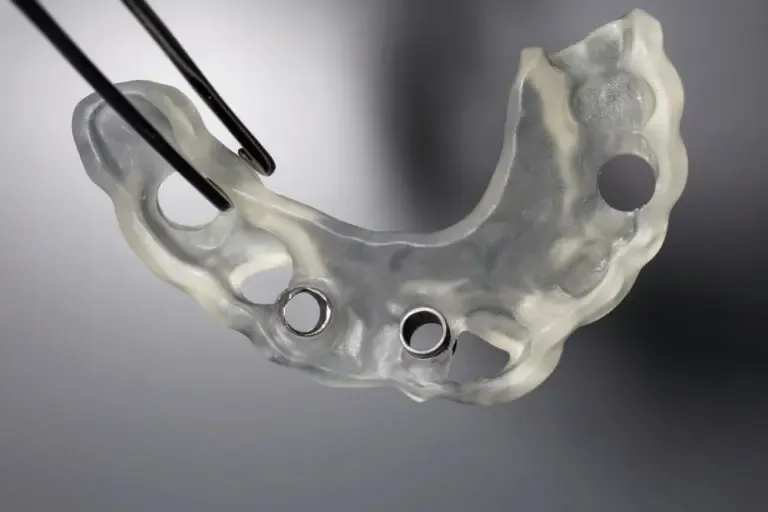

Selecting the right material for a surgical guide is crucial to ensure precision, safety, and efficiency in dental implant procedures. A high-quality surgical guide for dental implants not only improves clinical outcomes but also reduces the likelihood of complications by providing accurate drilling positions. With advances in 3D printing technology, laboratories can produce highly precise guides; however, material selection remains a critical factor.
Choosing the right 3D printing material involves understanding mechanical properties, sterilizability, biocompatibility, and clinical performance. Production managers also need to account for workflow efficiency, post-processing time, cost, and regulatory compliance. This comprehensive guide explores the most commonly used materials, compares their strengths and limitations, and provides best practices for laboratories producing surgical guides.
Importance of Material Selection for Surgical Guides
Material choice affects every aspect of a surgical guide, from fit and accuracy to sterilization and clinical usability. Selecting the wrong material can result in deformation, poor surgical fit, or even guide failure during procedures.
Clinical Accuracy and Surgical Outcomes
Dimensional accuracy is vital for implant placement. A guide that shifts even slightly can lead to misalignment of implants, causing long-term complications such as bone resorption or prosthetic misfit. Materials that maintain dimensional stability under printing and sterilization conditions are essential for precision.
Mechanical Stability and Handling
During surgery, guides must withstand physical handling. A brittle material can crack, while a too-flexible material may deform under pressure. Resin and nylon have different mechanical properties, and understanding these differences helps laboratories select the right guide material for each procedure.
Workflow and Production Efficiency
Material selection impacts print speed, post-processing requirements, and overall lab efficiency. Materials that require extensive post-curing or finishing may slow production, while easy-to-process materials can reduce turnaround times. Production managers need to balance clinical requirements with operational efficiency.
Common 3D Printing Materials for Surgical Guides
The most frequently used materials in dental surgical guides include resin, nylon, and specialty hybrid polymers. Each has unique properties that make it suitable for specific applications.
Resin-Based Materials
Resin remains the preferred material for high-precision dental guides. Its properties include:
- High dimensional accuracy for precise implant placement
- Smooth surface finish, allowing easy seating of the guide
- Availability in biocompatible grades suitable for intraoral use
- Compatibility with chemical sterilization; some grades withstand autoclave
- Easy post-processing, reducing overall production time
Resins are ideal for situations requiring exceptional accuracy, such as single or multiple implant cases where precise angulation and depth control are critical.
Nylon-Based Materials
Nylon is a flexible polymer often used for guides that need to endure repeated handling or sterilization. Its properties include:
- Strong and flexible, reducing the risk of fracture
- Tolerates autoclaving without significant deformation
- Suitable for reusable guides or guides with complex geometries
- May require surface finishing for precise fit
Nylon is particularly valuable for labs producing guides for full-arch procedures or guides with multiple integrated sleeves where durability is essential.
Other Specialty Materials
Emerging materials include hybrid polymers and advanced photopolymers designed specifically for surgical applications:
- Hybrid Polymers: Combine flexibility and strength, offering balance between nylon and resin
- Photopolymers: Allow for extremely fine detail, suitable for intraoral applications with complex contours
- Biocompatible Composites: Designed for long-term use, combining mechanical strength with patient safety
These specialty materials are gaining traction in advanced labs seeking customized guides for complex surgical cases.
Resin vs Nylon Surgical Guides
Understanding the advantages and limitations of resin and nylon helps determine the ideal material for each clinical scenario.
Accuracy and Fit
- Resin: Offers superior dimensional accuracy due to minimal shrinkage during curing. Critical for single-implant cases or guided surgery requiring micrometer-level precision.
- Nylon: Slightly less accurate but provides flexibility. Suitable for guides that undergo repeated handling or require some degree of adjustment during surgery.
Mechanical Properties
- Resin: Rigid but brittle. Must be handled carefully to avoid cracking during insertion or sterilization.
- Nylon: Flexible and impact-resistant. Can withstand minor mechanical stress without breaking, making it ideal for guides that experience repeated force.
Sterilization Compatibility
- Resin: Best suited for chemical sterilization; some surgical-grade resins withstand autoclaving but may require validation.
- Nylon: Can tolerate autoclave sterilization and repeated cycles without significant dimensional change.
Biocompatibility Considerations
Biocompatibility ensures that materials are safe for intraoral use and do not induce cytotoxic reactions. Regulatory compliance with ISO 10993 and FDA guidelines is essential for surgical guides.
- Surgical-Grade Resins: Certified for intraoral use, biocompatible, and safe for contact with tissues
- Biocompatible Nylon: Offers mechanical strength while meeting safety standards for repeated use
- Testing Protocols: Include cytotoxicity, irritation, and sensitization to ensure patient safety
Selecting a biocompatible material is not optional; it is a critical step in manufacturing surgical guides for clinical use.
Sterilizable Guide Materials
Sterilization ensures the guide is safe for intraoral use. Material choice dictates which sterilization methods are compatible.
- Autoclaving: High-temperature steam sterilization suitable for nylon; some resins may deform
- Chemical Sterilization: Preserves dimensional stability in most resins; often preferred in high-precision guides
- Gamma Sterilization: Occasionally used for pre-packaged guides; effectiveness depends on material properties
Understanding how a material behaves under different sterilization processes is critical for labs producing guides for multiple clinical scenarios.
3D Printed Dental Guide Accuracy
Accuracy is paramount in surgical guides, directly affecting implant placement and patient outcomes.
Factors Affecting Accuracy
- Material Shrinkage: Some resins shrink slightly during curing, affecting fit
- Printer Resolution: Higher-resolution printers produce more accurate guides
- Post-Processing Steps: Cleaning, curing, and finishing steps can impact final dimensions
Resin guides generally provide superior precision, while nylon is preferred when durability and flexibility are required. Using a high-quality 3D printing implant surgical guide ensures consistent accuracy from printing to clinical placement.
Material Comparison Table
| Material | Dimensional Accuracy | Flexibility | Sterilizability | Biocompatibility | Post-Processing Ease | Typical Use |
|---|---|---|---|---|---|---|
| Resin | High | Low | Chemical / Autoclave | High | Easy | Precision implant guides |
| Nylon | Medium | High | Autoclave | High | Moderate | Flexible / reusable guides |
| Hybrid Polymers | Medium-High | Medium | Chemical | High | Moderate | Specialized surgical guides |
| Photopolymers | High | Low | Chemical / Limited Autoclave | High | Moderate | Intraoral detailed guides |
Quality Control for Surgical Guide Production
Laboratories must implement strict quality control measures to ensure that every surgical guide meets clinical and regulatory standards.
- Dimensional Verification: Scan printed guides and compare with digital models to confirm precision
- Material Consistency Checks: Test mechanical properties and verify each batch
- Sterilization Testing: Confirm guides maintain dimensional integrity after sterilization
- Documentation: Maintain records for traceability and compliance
Consistent quality control reduces errors, ensures guide reliability, and maintains lab credibility.
Best Practices for Labs and Production Managers
- Select materials based on clinical requirements and sterilization methods
- Validate guide accuracy through post-processing inspections
- Maintain environmental controls during printing (temperature, humidity, resin handling)
- Train staff on proper handling to avoid contamination or deformation
- Track material batches and monitor performance for continuous improvement
Implementing these practices ensures reliable, accurate, and clinically safe surgical guides.
Case Study: Resin vs Nylon in Full-Arch Implant Guides
In a recent study, two full-arch surgical guides were produced using resin and nylon. Resin guides provided superior accuracy in sleeve positioning, but one guide fractured during insertion. Nylon guides were slightly less accurate but handled repeated adjustments without damage. This demonstrates that material selection should balance precision with mechanical durability depending on the surgical scenario.
Conclusion
Choosing the right 3D printing material for surgical guides is essential for accuracy, patient safety, and clinical success. Resin, nylon, and specialty polymers each have advantages depending on mechanical, biocompatibility, and sterilization requirements. Laboratories that implement rigorous quality control protocols and select materials based on clinical need can produce highly reliable surgical guides. For more information or to discuss your specific requirements, please Contact Us.