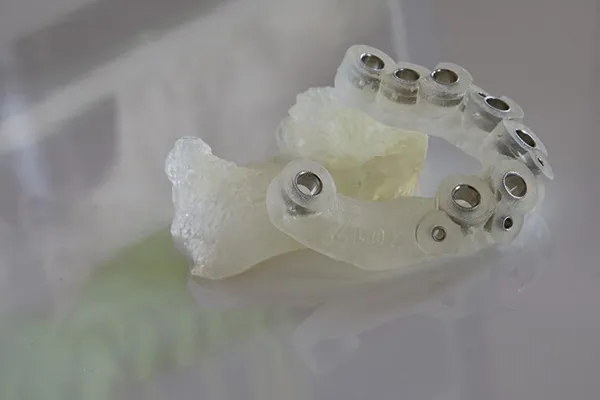

3D printed dental implant surgical guides have transformed dental and surgical procedures by improving accuracy, precision, and efficiency. For clinics considering this technology, it's important to evaluate the pros and cons of in-house versus outsourced production. Choosing how to produce a dental implant surgical guide impacts costs, turnaround time, quality control, and workflow integration. By carefully analyzing these factors, clinics can determine the best approach to maximize patient outcomes and streamline their operations.
What is In-House Guide Production?
Producing surgical guides in-house means that your clinic manages the entire workflow internally, from design to printing. This approach offers more control over every stage of production, allowing for customization and rapid turnaround. In-house production is often favored by high-volume clinics or practices that prioritize immediate access to guides for urgent cases.
Benefits of In-House Production
- Complete control over design and quality
- Ability to make immediate adjustments for complex cases
- Faster turnaround time, reducing patient wait times
- Development of in-house staff expertise and skills in 3D printing
- Greater flexibility in responding to last-minute surgical requirements
Challenges of In-House Production
- High upfront investment for printers, software, and training
- Ongoing operational costs for materials, maintenance, and labor
- Need for specialized staff trained in CAD/CAM design and 3D printing
- Inventory and material management responsibilities
- Regulatory compliance and documentation for quality assurance
Investing in in-house production requires careful consideration of workflow integration, training requirements, and the long-term return on investment. Clinics that can handle the complexity may benefit from enhanced efficiency and flexibility.
Understanding Outsourced Guide Production
Outsourced production involves partnering with an external company to design and manufacture your surgical guides. This model is ideal for clinics that do not want to invest in equipment or training, or that have lower volumes of surgical cases. Outsourcing leverages specialized providers who maintain high-quality standards and offer scalability.
Advantages of Outsourcing
- No upfront investment in equipment or software
- Reduced staff training requirements
- Access to high-quality, certified manufacturing
- Flexibility to scale operations without significant capital expenditure
- Reduced operational burden for clinic staff
Disadvantages of Outsourcing
- Dependence on external turnaround times
- Limited ability to make last-minute adjustments
- Potential communication delays with the provider
- Less direct control over quality assurance processes
- Additional logistics and shipping considerations
Outsourcing can be an effective strategy for clinics that prioritize consistent quality and efficiency without the operational challenges of in-house production.
Cost Considerations: In-House vs Outsourced
Understanding the cost implications of each model is essential for decision-makers. Costs can be grouped into initial investment, operational costs, and quality assurance.
In-House Costs
- Initial investment: 3D printer, CAD software, post-processing equipment
- Operational costs: resins, filaments, materials, staff labor hours
- Maintenance costs: calibration, repairs, and consumables
- Quality assurance: staff training and inspection procedures
Outsourced Costs
- Per-guide service pricing with volume discounts
- Shipping and handling fees
- Revision or rework fees for adjustments
- Embedded quality control in service pricing
Clinics should perform a detailed cost-benefit analysis to determine whether in-house production will pay off over time or if outsourcing is the more financially viable option.
Maintenance and Operational Efficiency
Maintaining 3D printing equipment is critical for consistent output and accuracy. In-house production requires dedicated time and technical knowledge for maintenance. Outsourced production shifts these responsibilities to the provider, allowing clinic staff to focus on patient care.
Key Maintenance Tasks for In-House Printing
- Daily cleaning and sterilization of printers
- Weekly calibration of printer hardware and software
- Replacement of consumables like resins and filaments
- Troubleshooting printing errors and ensuring accuracy
Operational Efficiency Comparison
| Factor | In-House | Outsourced |
|---|---|---|
| Control Over Design | High | Medium |
| Turnaround Time | Fast | Dependent on provider |
| Scalability | Limited by staff/equipment | High |
| Maintenance Responsibility | Clinic staff | Service provider |
| Training Requirement | High | Low |
A comparison like this helps clinics evaluate how maintenance and operational demands affect their overall workflow efficiency and patient care delivery.
Guide Quality Control and Compliance
Ensuring consistent quality and compliance with medical standards is crucial, regardless of the production model. Each approach offers different advantages in quality control.
In-House QC
- Direct inspection of each printed guide
- Adjustments to printing parameters for accuracy
- Record-keeping for regulatory compliance
- Staff training on quality assurance standards
Outsourced QC
- External labs perform inspections and testing
- Standardized processes reduce the likelihood of error
- Provider ensures compliance with ISO and other medical device standards
- Limited direct oversight for the clinic
For clinics performing complex procedures, choosing the right QC process can impact surgical success rates. Both models require adherence to medical regulations to ensure patient safety.
Workflow Integration in Clinics
The integration of surgical guide production into daily clinic operations can affect efficiency and patient satisfaction. Proper coordination and training are essential for both in-house and outsourced workflows.
In-House Workflow
- Collect patient imaging and scan data
- Design guide digitally using CAD/CAM software
- Print and post-process the guide
- Sterilize and prepare the guide for surgical placement
Outsourced Workflow
- Send scan data to the external provider
- Review and approve the digital design
- Receive finished guide for surgical use
- Integrate guide into surgical planning and patient care
Workflow Challenges
- Aligning production timelines with patient schedules
- Managing urgent or last-minute adjustments
- Ensuring consistent sterilization and regulatory compliance
- Training staff on digital tools and 3D printing software
Proper workflow planning ensures that guides are ready when needed, avoiding delays and optimizing patient outcomes.
Making the Right Decision for Your Clinic
Clinics must weigh multiple factors when deciding between in-house and outsourced production. These factors include costs, staff expertise, patient volume, quality control, and operational priorities.
Key Considerations
- Cost vs. Benefit: Analyze long-term ROI of in-house investment versus per-guide outsourcing costs
- Volume of Cases: High-volume clinics may benefit from in-house production; low-volume clinics may prefer outsourcing
- Staff Expertise: Assess whether your team has the skills for design and 3D printing
- Quality Assurance: Determine how critical direct oversight is for your guides
- Turnaround Time Needs: Urgent surgical cases may require in-house flexibility
For precision procedures, clinics should consider surgical guides for implants to ensure accuracy and patient safety.
Advantages Summary
- In-House: Immediate adjustments, faster turnaround, high control over quality
- Outsourced: Lower upfront investment, scalable, certified quality assurance
- Both approaches can enhance patient care if aligned with clinic strategy
Clinics should select the approach that aligns with their workflow, patient volume, and quality priorities.
Conclusion
Choosing between in-house and outsourced surgical guide production is a strategic decision that impacts costs, workflow, and patient outcomes. Evaluate your clinic's resources, staff expertise, and volume of cases to make an informed choice. For clinics ready to discuss options, request a quote, or get personalized guidance, visit our Contact Us page.